


Children to Be Taught How to Spot Fake News: What Parents Need to Know
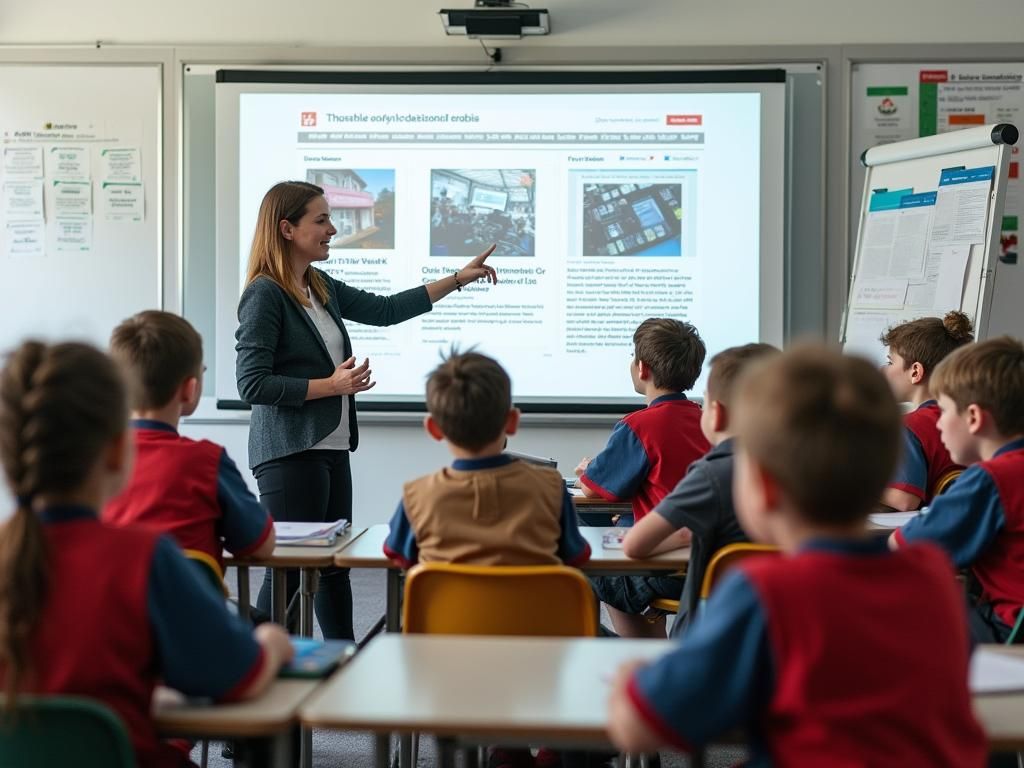
Transparency Statement: To visually represent the theoretical curriculum changes and concepts discussed (such as lessons on fake news), select images within this article have been created using AI generation tools. These images are illustrative and do not represent actual students, teachers, or classroom settings.
Social media, viral videos, artificial intelligence, deep fakes – it’s hard to know what’s real or what’s been created to mislead. So the Government’s recent announcement that it will update what children learn at school to reflect the realities of the digital world has been widely welcomed. As part of its pledge to create a national curriculum that equips young people with the skills they need for life and work, it will aim to teach them how to identify misinformation, false or misleading online content, and make sense of complex digital information.
Here’s what the changes mean for your child, and how you can support them at home:
What’s changing in schools
Schools in England are preparing to introduce major updates to the national curriculum, with a focus on equipping pupils at all stages with stronger digital and media literacy. For the first time, children will be taught how to spot fake news and identify misinformation or disinformation (false information shared by mistake and content deliberately designed to mislead). This includes recognising when content is designed to provoke strong emotions, encourage harmful behaviour or promote extreme ideas.
Subjects like Citizenship and Computing will play a big role, helping children learn how to analyse information, recognise bias and question what they see online. The aim is to make digital literacy part of everyday learning, so children can use these skills across subjects and in their daily lives. The new curriculum is expected to be fully in place by September 2028, giving schools time to prepare.
Why this matters for your child
Every day children are encountering questionable content online, such as social media posts or AI generated videos. Some of this is harmless, but some may be designed to deceive, influence opinions or pull young people towards extreme or polarising ideas. By bringing questions such as “Is this true?” and “Who made this?” into classroom conversations, they’ll be better equipped to navigate online spaces with curiosity and caution. Developing these skills from a young age will help children not only navigate online content safely but will also build confidence in making decisions and expressing their opinions.
For example:
English lessons may involve children looking at news articles to spot misleading headlines and biased language.
Maths and Computing might explore misleading graphs or detect deep fake content, teaching students to question statistics and visual information.
Citizenship classes will cover digital rights, online safety and what it means to be a responsible digital citizen. Children will also be taught to understand the impact of sharing false or harmful content and why it’s important to challenge extreme or hateful views.
What this means at home

As a parent, you can reinforce what your child is learning at school and help them apply it in real life. Here are some practical ways:
1. Talk and question together
Encourage your child to think about what they see online. Ask questions like: “Who made this?”, “What do they want me to do?”, or “Could this be trying to influence how people think or feel?”
2. Explore apps and websites together
Look at social media, games or websites with your child. Discuss adverts, sponsored content and user-generated material to help them understand possible intentions behind content.
3. Encourage fact checking
Encourage children to verify surprising claims using trusted news or fact checking sites. Over time, this builds the habit of thinking carefully about online content.
4. Reinforce safe, responsible behaviour
Talk about why some apps appeal to people seeking privacy, including those with questionable motives. And remind your child that even private conversations should remain kind, safe and respectful.
5. Lead by example
Children learn by watching adults, so demonstrating how you check sources and question content yourself can reinforce these skills.
Final thoughts
As digital platforms evolve and AI generates new content, children need the skills to distinguish between truth, persuasion and fiction. With schools now planning to teach these skills from an earlier age, parents have a real opportunity to reinforce and extend this learning at home. By having open conversations, asking good questions and encouraging curiosity, you can help your child become a confident and critical thinker who can navigate the digital world with purpose and resilience.